Department of Microbiology

Director’s Message

roquyya

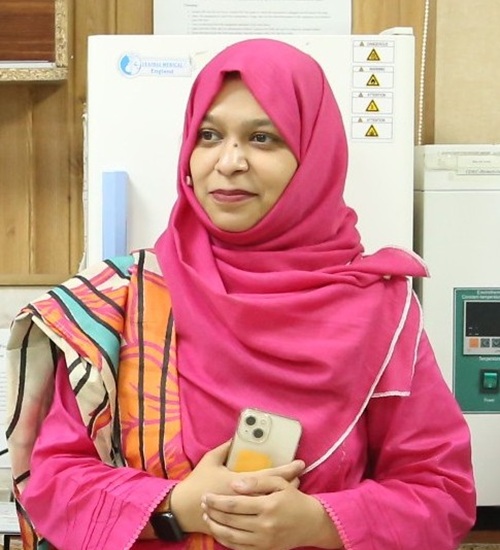
Dr. Roquyya Gul

The Gulab Devi Educational Complex, is one of the leading educational institutions of the Punjab with myriad institutes running under its umbrella. On the foundation stones of unity, faith, and discipline, in 2016 the Institute of Life Sciences was established to cultivate and advance the field with a global perspective. Over time, the institute has tremendously grown qualitatively and quantitatively, with state-of-the-art lecture rooms/halls, teaching laboratories with well-equipped research equipment’s for the Bachelor programs, strengthened by computer facility, well supported HEC- National Digital Library and a spacious sports stadium for all the recreational activities. We believe in quality assurance and enhancement, which is a dynamic process and our faculty is well trained and vibrant to take up the challenge, reach the rising bar of excellence and keep pace with the changing national and international needs. In a nutshell, I must say our institute is a perfect avenue for the students to get admission in the fields of Biochemistry, Biotechnology and Microbiology and take their first step towards a successful future.

Department of Microbiology Introduction

The Department of Microbiology was established in 2016 under the umbrella of Institute of Life Sciences, Gulab Devi Educational Complex, Lahore, with an aim to provide quality education and advancing research in the field of microbiology. Microorganisms such as bacteria, viruses, and fungi are the most abundant organisms on earth and play vital roles in an ecosystem balance, food production, and the health of both humans and animals. The department is actively engaged in the research areas including the investigation of antimicrobial resistance (AMR) to address the global threat of drug-resistant pathogens, and the discovery of novel bacterial strains with therapeutic applications in medicine. The state-of-the-art laboratory facilities and a team of passionate faculty members, in the department provides a dynamic environment for academic learning and innovative research, aiming to contribute to the development of sustainable health solutions and to strengthen scientific knowledge in the field of microbiology.

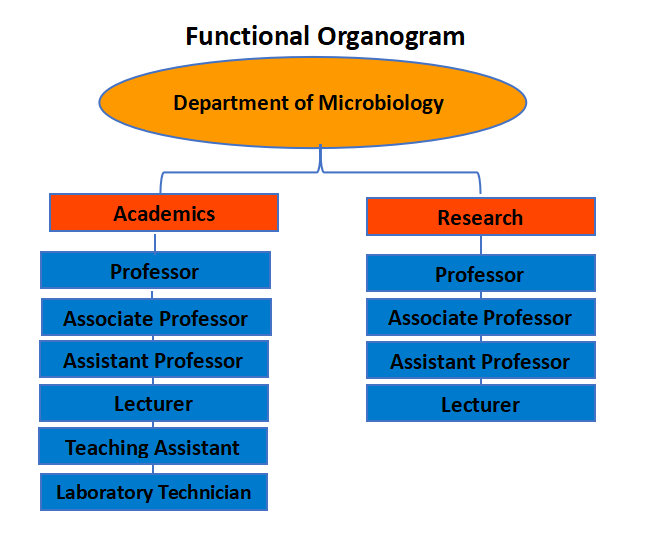
Functional Organogram

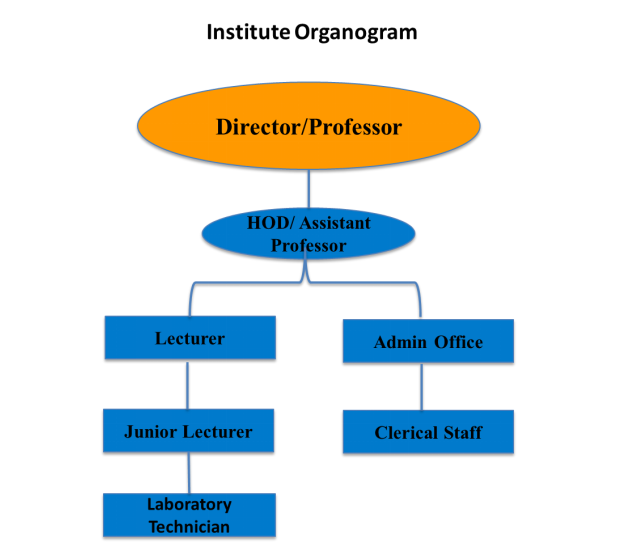
Institute Organogram

Program Overview

The curriculum covers the core concepts of topics including; cell biology, bacteriology, mycology, parasitology, microbial physiology, molecular biology, microbial genetics, microbial ecology, pathology, immunology, and virology. This program provides, both theoretical knowledge as well as hand on experience in modern techniques, preparing students for diverse careers in research, healthcare, environment, and industry.

Future/Job Opportunities for Graduates

Graduates with a BS in Microbiology have a wide range of career opportunities across multiple fields:

  • Microbiologists may pursue careers in academia, teaching at the college and university levels.
  • They may work in research labs or hospitals, studying micro-organisms roles in human and animal diseases and to develop preventive and therapeutic measures.
  • Microbiologists in agriculture sector contributes to developing genetically engineered crops, improving yields, reducing pesticide use, enhancing soil fertility, and mitigating plant diseases.
  • Food microbiologists ensure quality control and production efficiency in the food industry.
  • Graduates can work in water and dairy industries as quality control microbiologists.
  • They may serve in pharmaceutical and biotechnology companies, helping to develop new medicines, including vaccines and antibiotics.
  • As mycologists or industrial microbiologists, they may focus on producing biofuels, beverages, and other bacterial metabolites beneficial for human health.
  • Microbiologists have diverse and impactful career opportunities in Drug Testing Laboratories, Forensic Laboratories, Punjab Agriculture Food and Drug Authority (PAFDA) and the Pakistan Quality Control Board. These roles contribute to public health, safety, and regulatory standards by ensuring the quality and safety of pharmaceuticals, supporting forensic investigations, and maintaining compliance with health and safety guidelines.
  • Microbiologists are also in demand in environmental sectors, including their role in environmental protection agencies, to protect public health and pollution control programs.